CPA Networks
 Ad Networks
 Affiliate Programs
 Offer base



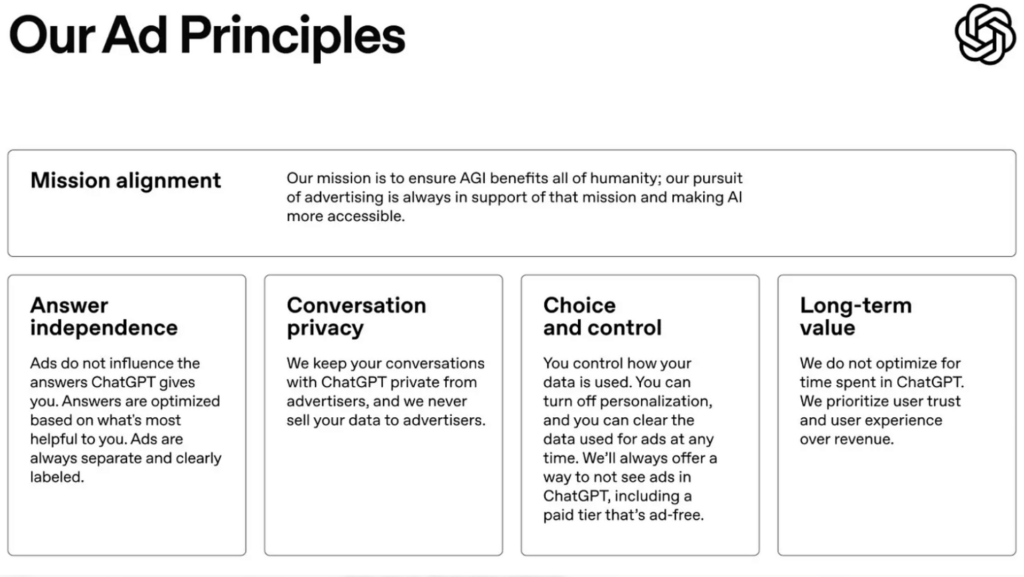
AI tools are fast becoming a source of traffic. By 2026, platforms like ChatGPT are already cutting into the ground covered by traditional search — users ask questions, compare products & then make their decisions right inside the chat.
Thats where ChatGPT advertising kicks in. Instead of banner ads or feed-based ads, brands get dropped in right after AI generated answers — smack in the middle of an ongoing conversation. This creates a whole new type of traffic. Users already have intent and are usually just one step away from buying.
We already covered this in a news update when ChatGPT first started testing ads in the US — at that point, it still looked experimental. Now it’s clear this is evolving into a whole separate layer of digital advertising.
For affiliates, this means a brand new chance:
- less competition for now because not everyone is onto this yet
- ultra-high-intent traffic which gets you closer to making the sale
- a shorter route to conversions which gets you results faster
At the same time, the whole ecosystem is still pretty raw: limited tools, unclear targeting and no established playbook to follow yet.
If you want to stay on top of shifts like this, then AffRoom is exactly the sort of place you need. That’s a community where affiliates go to track new traffic sources, test out their strategies and share the things that actually work. You can join in at any time and follow updates on AI ads and other emerging channels.
Now let’s break down what ChatGPT Ads are and how they work.
What Are ChatGPT Ads?
ChatGPT ads are a new breed of AI advertising that get dropped right into the conversations inside ChatGPT. Unlike search or social ads, they dont appear in search results or social feeds, instead they show up after the AI has had it’s say in the conversation, and are clearly labelled as sponsored.
The basic idea is pretty simple: the user asks a question, gets an answer, and then sees a relevant offer that takes into account what they just asked.
How ChatGPT Ads Look in Practice
In most cases, a ChatGPT ad looks like:
- a short sponsored recommendation
- a product or service that matches what they’re looking for
- sometimes a link with a bit more context to go along with it
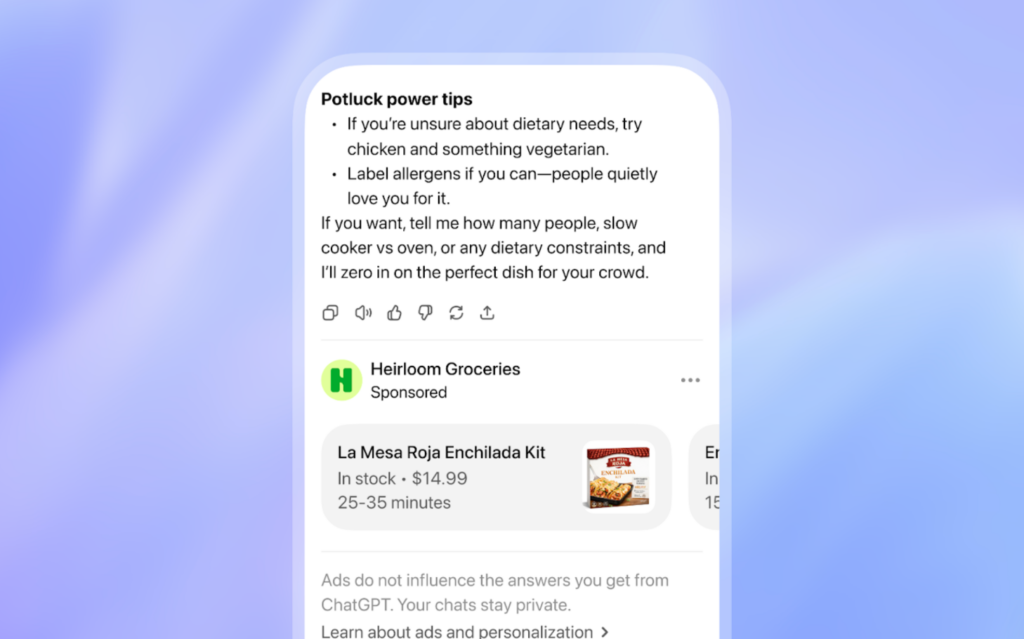
The key thing to remember here is that — while ads are separate & clearly labelled as sponsored, they don’t alter what the AI says in any way, but appear as the user is actively engaged and considering making a purchase.
How This Differs From Traditional Ads
ChatGPT advertising is a whole different ball game from what affiliates are used to
- No scrollable feeds or banners — no endless scrolling
- No traditional keyword lists — at least not yet!
- It’s all about context over audience targeting — where you get to see the conversation and pitch in the right place at the right time
- Timing is everything — they show up right after the AI has given its answer, not before theyve even thought about making a purchase
In practice, this makes ChatGPT ads closer to:
- search ads (because of intent)
- native ads (because of integration into content)
But technically, it’s a separate format.
Why This Format Matters
The main difference here is user behaviour
People don’t casually scroll through ChatGPT, they arrive with a question in mind, often with a problem to solve or a product to find out more about.
Which means:
- they’ve got a clear intent compared to the random user traffic we’re used to on social media
- there’s a lot less distractions
- and potentially a much higher conversion rate
But at the same time, this also means creatives need to nail the context — generic offers just won’t cut it here, relevance is absolutely everything.

How ChatGPT Advertising Works
ChatGPT advertising is built around intent. Ads are triggered by what the user is actively asking inside chat, not by who the user is.
Rather than trying to interrupt the conversation, ads are added after the AI’s response, when the user already has context and is closer to making a decision, which changes everything.
How the System Works in Practice
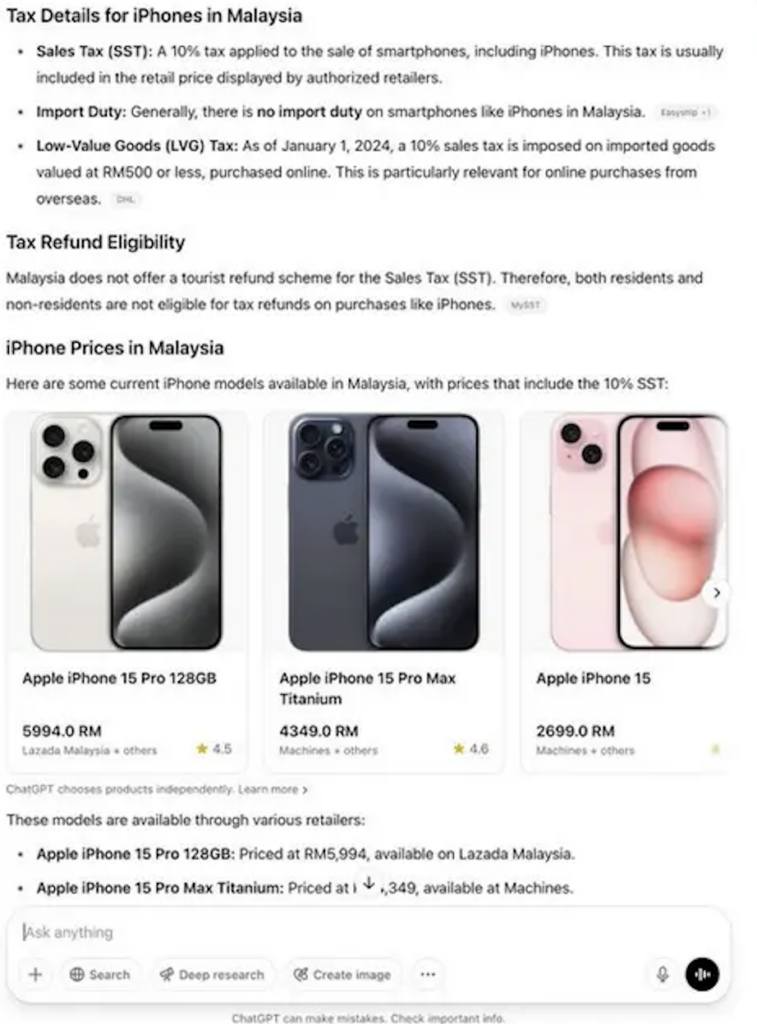
Here’s how it all shakes out:
- a user comes in with a question
- ChatGPT gives them an answer
- a relevant ad pops up below — it’s a sponsored block that supplements the AI’s response
The ad doesn’t interfere with the answer itself and is always clearly labeled. Its job is to extend the response with a commercial option that actually makes sense.
Core Mechanics of ChatGPT Ads
| Element | How it Works |
| Placement | After the AI response, inside the conversation |
| Targeting | Based on query + conversation context |
| Data Used | Intent signals, not classic audience data |
| Pricing Model | Early stage, mostly impression-based |
| Platform Access | Limited, no full self-serve dashboard yet |
| Relevance Filter | High — ads must match the context closely |
What This Means for Campaign Setup
There are a few things to keep in mind if you’re running a campaign on ChatGPT.
- First, targeting is not just about demographic or interest-based groups anymore. The system reads intent from the conversation, so the same offer can perform way differently depending on how the user phrased their question.
- Second, long-tail queries are way more important now than ever. A user searching for “Best budget CRM for small teams” is way easier to match with a relevant offer than someone just searching for something vague.
- Third, creatives are all about relevance & not hooks anymore: if your offer doesn’t actually answer the user’s question, it’s not gonna fit into the flow.
ChatGPT advertising behaves more like search than social, but with way more context.
You’re not just buying up traffic in bulk — you’re trying to match very specific moments of intent. Which makes this channel way harder to scale – but way stronger in terms of conversion quality.
Types of AI Ads Available Today
Right now, ChatGPT ads are still in an early stage. There’s only one core format live, while others are either limited or still evolving.
For affiliates, it’s important to understand both what already exists and what’s likely coming next — because the format directly affects how you approach traffic and funnels.
Current Format: Sponsored Recommendations
The one main format that’s actually out there right now is pretty simple:
- a block of paid for stuff shown after you get a response from chat
- it’s a product or service or link to something
- it’s clearly marked as an advert — there’s no getting round that
It’s the closest thing we have to native ads inside a conversation: the main difference is that the user already knows they’ve got an answer and are now thinking about which one to go for.
Emerging AI Ad Formats
Some formats are not fully rolled out yet, but are already being discussed or tested. This is partly based on current industry direction and how AI platforms evolve.
| Format | Status | How It Works |
| Sponsored recommendations | Live | Ads shown after AI responses |
| Product suggestions | Limited | AI suggests products with sponsored placements |
| Conversational ads | Early concept | Ads integrated deeper into dialogue (multi-step interaction) |
| AI-generated creatives | Growing | Ad copy generated dynamically based on user query |
What’s Important for Affiliates
Right now ChatGPT Ads are pretty straightforward to understand — they’re simple in format but it’s really all about how well the offer matches what the user is looking for.
Everything depends on:
- how well the offer actually solves the users problem
- how naturally it fits into the conversation
- how clear it is that the offer is worth taking a look at
The key thing to remember here is that there is no control over the creatives or where they are shown. The system is still very much in control of all of this.
ChatGPT Ads vs Traditional Digital Advertising
ChatGPT ads don’t replace existing channels — they are just another new one to add to the mix. But the way it’s set up is different enough that just treating it the same way as a Google or Facebook ad won’t work.
The main shift is from buying ad space based on who the user is to placing ads based on what they are actually searching for.
| Element | ChatGPT Ads | Traditional Digital Ads |
| Targeting | Query + conversation context | Interests, demographics, behavior |
| User Intent | High (explicit question) | Mixed (often passive scrolling) |
| Placement | After AI response | Feeds, search results, websites |
| Ad Format | Text-based, native-style | Banners, video, native, search |
| Competition | Low (early stage) | High and saturated |
| Optimization | Limited tools | Advanced dashboards and automation |
| Scalability | Limited for now | High |
Are ChatGPT Ads Effective for Affiliates?
Short answer: yes — but not in the same way as traditional traffic sources.
ChatGPT ads bring high-intent users, which is exactly what affiliates usually try to get from search. People already have a question, compare options, and are closer to making a decision inside ChatGPT.
That said, effectiveness depends on a few factors.
Where ChatGPT Ads Perform Well
- problem-solution offers (VPN, SaaS, tools)
- clear value propositions
- short decision cycles
In these cases, traffic can convert faster because there’s less noise between the question and the offer.
Main Limitations Right Now
- No full control over targeting
- Limited access to the platform
- No real scalability like in push or social
- Lack of case studies — the market is still new
Important: there’s still no solid public ROI data. Any conclusions so far are based on early tests and the general logic of intent-driven traffic.
ChatGPT ads can work for affiliates — but right now it’s more about early testing than stable scaling.
FAQ: ChatGPT Advertising Explained
What are ChatGPT ads?
ChatGPT ads are sponsored messages that pop up in conversations you have with ChatGPT. They tend to appear right after the AI’s answer and are clearly marked as ads, so they’re not sneaky or in-your-face like some other ads online.
They work a bit differently from the usual ad formats, too. Instead of interrupting your conversation, they kind of build on the question you asked and offer something relevant.
How does ChatGPT advertising work?
So, the system uses some pretty clever logic to figure out what you’re looking for.
The system analyzes:
- the user’s question
- the context of the conversation
Then matches it with a relevant ad.
There’s no classic audience targeting. Ads are triggered by what the user is actively looking for, not by their profile.
What types of AI ads are available?
Right now, the main format is:
- sponsored recommendations shown after responses
Other formats are still evolving, including:
- product-based suggestions
- deeper conversational integrations
The ecosystem is still developing, so new formats are likely to appear.
How to create a ChatGPT ad campaign?
At the moment, there is no fully open self-serve platform.
In practice, preparation comes down to:
- identifying high-intent queries
- matching them with the right offer
- building a landing page aligned with the user’s question
Most of the control is still on the platform side, not the advertiser.
Are ChatGPT ads effective for affiliates?
They can be effective due to high-intent traffic and shorter decision paths.
However:
- the channel is still early
- tools and scaling options are limited
- there are few proven case studies
For now, it’s more suitable for testing and early adoption than for consistent scaling.
Conclusion
ChatGPT advertising is still early, but AI platforms like ChatGPT are already becoming traffic sources. The ecosystem is raw — limited tools, little data — but competition is still low. The model is close to search: intent-driven and conversion-focused. If you already work with that type of traffic, adapting is straightforward.
To keep up with how this channel evolves, AffRoom is where affiliates follow updates, test ideas, and share results.