CPA Networks
 Ad Networks
 Affiliate Programs
 Offer base



A demand-side platform decides where your programmatic budget goes, what you pay for each impression and how much of your spend actually reaches media. Pick the wrong one and you either overpay for enterprise features you never use or run out of budget before the bidding algorithm learns anything.
The choice is also harder than it was a year ago. Microsoft Invest, the DSP formerly known as Xandr Invest, closed in February 2026. Amazon dropped the minimum spend for its self-serve DSP, and a US court set new rules for Google’s ad tech stack. Many existing rankings haven’t caught up yet.
At AffRoom, we track ad networks, traffic sources and advertising platforms every day to help affiliates and advertisers decide where to buy traffic. This guide explains how DSPs work and compares 8 demand-side platform companies worth testing in 2026. It also breaks down real entry costs and gives a checklist for choosing the right platform. Everything below was checked against company announcements, earnings reports and official pricing pages as of September 2026.
What Is a Demand-Side Platform?
A demand side platform (DSP) is software that lets an advertiser buy impressions across many ad exchanges and SSPs from one interface, with bidding, targeting and reporting automated. Instead of negotiating with publishers one by one, you set the audience, budget and bid rules, and the DSP decides in milliseconds whether each impression is worth buying.
How a single impression is bought through RTB (real-time bidding):
- A user opens a page, app or CTV stream that has an ad slot.
- The publisher’s SSP sends a bid request — device, geo, placement, context and IDs where available — to ad exchanges and connected DSPs.
- Each DSP scores the impression against your targeting and remaining budget, then returns a bid or passes.
- The exchange runs the auction and serves the winning creative.
- The DSP logs the impression, click and conversion, and feeds the result back into its bidding model.
The whole loop takes a fraction of a second. For the wider mechanics, see our explainer on programmatic ad networks.

DSP vs SSP vs Ad Exchange vs Ad Network
| Player | Works for | What it does | How the advertiser pays | Examples |
|---|---|---|---|---|
| DSP | Advertiser or agency | Bids on impressions across many exchanges and SSPs | Media cost + platform fee (% of spend) | The Trade Desk, DV360, Amazon DSP |
| SSP | Publisher | Offers inventory to many DSPs, sets price floors | Nothing directly; the SSP takes a cut from the publisher | Magnite, PubMatic, Index Exchange |
| Ad exchange | Both sides | Runs the auction between buyers and sellers | Built into the clearing price | Google AdX, OpenX |
| Ad network | Advertiser and publisher | Packages inventory it controls and resells it | CPM, CPC or CPA set by the network, margin included | Adsterra, PropellerAds, RichAds |
The practical difference for media buyers: an ad network sells you its own traffic at a price that already includes its margin, while a DSP connects you to many supply sources but leaves bidding, supply selection and fraud control to you. We break this down further in Ad Network vs. DSP.
How DSPs Fit into the Digital Advertising Ecosystem
A demand-side platform never operates alone. It sits inside a wider digital advertising ecosystem alongside supply-side platforms, ad exchanges, data management platforms and the publishers who supply the ad inventory. Understanding how a DSP connects to that stack matters more than any single feature comparison, because a demand-side platform is only as good as the digital ad inventory and data it can reach — and the wider programmatic advertising ecosystem keeps producing credible platform options at the margins, even outside a single digital advertising platform’s own walled garden.
CTV, Programmatic Advertising Platforms and the Stack Around a DSP
On one side of programmatic advertising sit publishers, represented by supply-side platforms that package their ad inventory for auction. On the other side sits the advertiser, represented by the DSP. An ad exchange, or an ad exchange embedded inside a larger ad tech stack, connects the two in real time. CTV works the same way: streaming apps sell their ad breaks through SSPs, and a DSP bids on them just as it bids on web impressions, only at higher CPMs. Some vendors now market a single platform that folds DSP, data management and reporting into one interface — convenient for smaller teams, though it usually trades some best-of-breed depth for that convenience.
Data, Targeting and Machine Learning Inside a DSP
Every modern demand side platform leans on machine learning to score bids in the milliseconds an auction allows, but the audience targeting is only as strong as the data feeding it. First-party data from your own CRM or site typically outperforms third-party data for campaign management, since it reflects real customers rather than modeled audiences, and it lets a DSP reach ad inventory across multiple exchanges more efficiently — a pattern that already defines digital advertising in 2026. A DSP that can blend first-party data with its own contextual and behavioral signals, inside one campaign management workflow, generally outperforms one that treats every advertiser’s data the same way — and that blend is what makes ongoing optimization actually work rather than just adjusting bids in isolation.
What Changed in Programmatic Advertising by 2026
- Microsoft left the buy side. Microsoft Invest closed on February 28, 2026, and Amazon DSP became the preferred migration path. Microsoft Monetize, its SSP, joined Amazon’s Certified Supply Exchange, so Microsoft inventory is now reachable from Amazon DSP.
- Amazon DSP turned into a volume product. The self-service floor is gone, while Amazon’s managed service still expects roughly $50,000 per month. Practitioners put a workable self-serve budget at $5,000–$15,000 per month so the algorithm collects enough conversion signal.
- Google keeps its stack, under new rules. The September 2026 ruling leaves ownership of AdX and DFP unchanged but restricts how they operate. During the case, the DOJ argued that about 21% of indirect open-web display spend flowed through DV360. The EU case, where structural remedies are still being discussed, remains open.
- The biggest independent DSP is under pressure. The Trade Desk reported $715 million in Q2 2026 revenue and guided Q3 to at least $650 million. Management blamed macro pressure on large CPG and auto advertisers plus its own execution. The company answered with the Kokai “Zuma” release on August 27, 2026.
- AI agents now touch live budgets. Yahoo DSP launched agentic features on January 6, 2026 and an Agent Network with 23 ad tech partners in June. That speeds up setup and troubleshooting, but it also means more automated decisions you need to audit.
How We Picked These Demand-Side Platform Companies
Each platform was assessed on:
- Access model — self-serve, managed service or white label
- Entry budget — official minimums and realistic working budgets
- Inventory and channels — open web, native, video, CTV, in-app, audio
- Data — first-party onboarding, retail or proprietary data, identity solutions
- Transparency — fee disclosure, log-level data, supply path controls
- Brand safety and fraud controls — pre-bid filtering and verification integrations
- Status in 2026 — platforms that shut down or showed no verifiable 2026 activity were excluded
Demand-Side Platform Comparison: 8 Top DSP Platforms at a Glance
| # | Platform | Type | Access | Entry point | Strongest in | Best for |
|---|---|---|---|---|---|---|
| 1 | The Trade Desk | Independent, enterprise | Contract | Five-figure monthly commitment | CTV, audio, open web | Agencies and large brands |
| 2 | Google DV360 | Walled garden + open web | Via Google partner or contract | High, partner-dependent | YouTube, Google supply | Brands already on Google stack |
| 3 | Amazon DSP | Retail media + open web | Self-serve or managed | No official self-serve floor; managed ~$50k/mo | Shopper data, Prime Video, Twitch | E-commerce and consumer brands |
| 4 | Yahoo DSP | Independent, omnichannel | Contract | Mid-market push | Commerce media, agentic tools | Mid-size agencies |
| 5 | StackAdapt | Independent, self-serve | Self-serve signup + tiers | No stated minimum | Native, contextual, CTV | Mid-market performance buyers |
| 6 | Viant | Independent, CTV-first | Self-serve + managed | On request | CTV, household ID, attention data | CTV-heavy advertisers |
| 7 | MediaMath by Infillion | Independent, API-first | Contract | On request | Log-level data, custom bidding | Technical in-house teams |
| 8 | Epom White-Label DSP | White label | Monthly SaaS | From $250/mo | Custom SSP connections, niche verticals | Affiliates, ad networks, small agencies |
The 8 Best Demand-Side Platforms in Detail
Each review below covers what the platform does best, how you get access, and the main limitation to check before you commit budget. The order follows scale and market position, not a quality score: the right DSP depends on your channel and budget.
1. The Trade Desk — the largest independent DSP
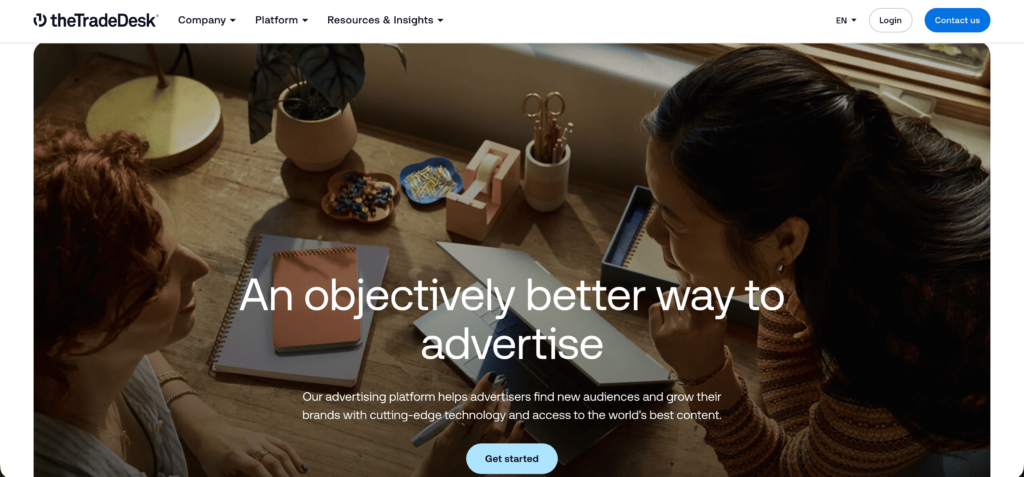
The Trade Desk is the default choice for agencies that want scale on the open internet without buying inside Google’s or Amazon’s ecosystem. Its Kokai platform uses AI-driven bid factors that stay on by default unless a trader overrides them. The Q2 2026 release added CTV pause ads, private marketplace deal management and supply chain quality signals. The August 2026 Zuma update focused on usability and agentic features.
The weak spot right now is the business, not the product: revenue growth nearly stalled in Q2 2026, and Q3 guidance points to a year-on-year decline. For buyers this mostly means aggressive commercial terms and a heavier push into joint business plans, but it is worth tracking.
- Access: contract, typically through an agency or direct enterprise seat
- Channels: display, video, CTV, audio, native, DOOH
- Best for: agencies and brands with dedicated programmatic traders
- Watch out for: platform fee plus data and verification fees; entry commitment
2. Google Display & Video 360 — the Google-first option
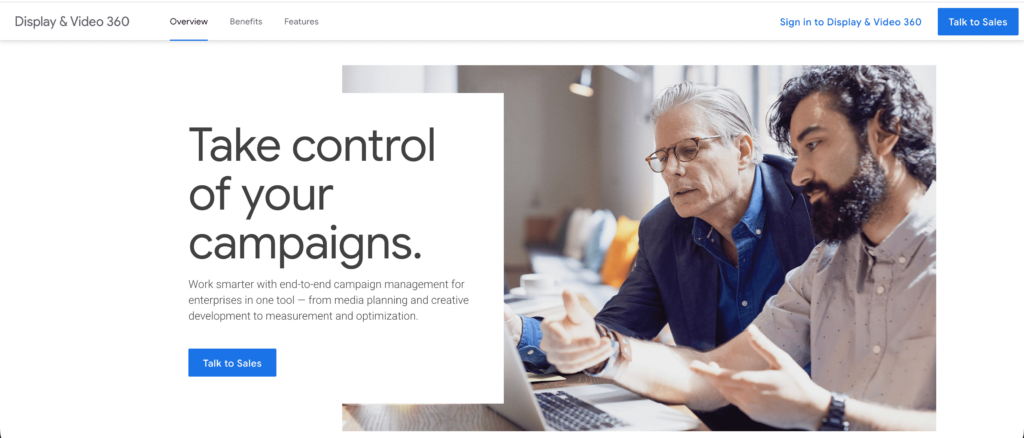
DV360 is the buy side of Google Marketing Platform and the most direct programmatic route to YouTube and Google’s own supply. It works best for advertisers already running Google Ads, Campaign Manager 360 and GA4, where audiences and conversion data move with little friction.
Access usually runs through a Google Marketing Platform partner, which adds cost and a relationship to manage. The September 2026 antitrust ruling does not break up Google’s ad business, but it changes auction rules on the sell side, so expect gradual shifts in how DV360 bids compete with rival exchanges.
- Access: Google partner or direct contract
- Channels: YouTube, display, video, CTV, audio
- Best for: brands with deep Google stack integration
- Watch out for: high practical entry budget; limited visibility into Google’s own auction mechanics
3. Amazon DSP — shopper data at open-web scale
Amazon DSP buys display and video both on Amazon properties — Prime Video, Twitch, Fire TV, IMDb — and across the open web. Its edge is first-party shopping data that no other DSP can offer. After Microsoft Invest closed, it also inherited Microsoft’s advertisers and access to Microsoft Monetize supply.
The biggest change is access. Self-service no longer has an Amazon-imposed minimum; you pay media plus a technology fee. Managed service still requires around $50,000 per month. Brands that do not sell on Amazon can use it too, but the targeting advantage is strongest for products with retail purchase data behind them.
- Access: self-serve, managed service, or through an agency with DSP access
- Channels: display, video, CTV (Prime Video, Fire TV), audio, open web
- Best for: e-commerce and consumer brands, retargeting and prospecting
- Watch out for: below roughly $5,000–$10,000 per month, campaigns often don’t exit the learning phase
4. Yahoo DSP — the most aggressive on agentic buying
Yahoo DSP has spent the last year rebuilding its infrastructure and pushing into the mid-market. In January 2026 it launched agents for campaign activation, troubleshooting and audience exploration, and advertisers can connect their own AI agents through MCP. In June it added an Agent Network with 23 partner-built tools.
Buyers value it as a credible alternative as the market consolidates around Amazon, Google and The Trade Desk. Commerce media has become one of its stronger areas. The open question is scale: speculation about a possible sale of Yahoo’s ad tech assets has not gone away.
- Access: contract, with a growing mid-market offering
- Channels: display, native, video, CTV, audio, DOOH
- Best for: mid-size agencies that want AI automation without a black box
- Watch out for: smaller share of spend than the top three
5. StackAdapt — the self-serve pick for mid-market buyers
StackAdapt started as a native advertising platform and grew into a full self-serve DSP covering display, video, CTV, audio, DOOH and in-game. It is consistently one of the top-rated DSPs on G2 for usability and support, which matters if you don’t have a dedicated trading desk.
The pricing page lists five tiers from Basic to Enterprise. Basic is open to self-serve signup; higher tiers go through a demo. No minimum spend is stated, and there are no annual contracts. That makes it one of the easiest ways for a performance team to test programmatic next to its native ad network sources.
- Access: self-serve signup, tiered plans
- Channels: native, display, video, CTV, audio, DOOH, in-game
- Best for: mid-market brands, agencies and performance buyers
- Watch out for: no public dollar pricing; policy restrictions for gray verticals
6. Viant — CTV-first with proprietary data
Viant positions itself as an exclusively buy-side platform built around CTV. In May 2026 it closed the acquisition of TVision, adding second-by-second attention and co-viewing data to its household ID graph. Q2 2026 revenue grew 34% year on year, CTV spend rose nearly 50%, and more than 80% of CTV spend now runs through its Direct Access publisher paths.
Its ViantAI “Outcomes” product automates campaign execution and already accounts for about 5% of platform spend. If CTV is your main channel and you want video inventory with measurement built in, Viant is the strongest independent alternative to The Trade Desk.
- Access: self-serve and managed
- Channels: CTV, linear TV, video, audio, display, DOOH
- Best for: CTV-heavy advertisers that need household-level measurement
- Watch out for: less relevant if you mainly buy display or native
7. MediaMath by Infillion — control for technical teams
MediaMath, often credited as the first DSP, filed for bankruptcy in 2023 because of its debt load and was bought by Infillion the same year. It now runs as MediaMath by Infillion, with an API-first, modular setup, log-level data access and customizable bidding algorithms.
It suits teams that treat programmatic as an engineering function rather than a managed service. Infillion’s own curated marketplace guidance gives an idea of pricing: example floors of roughly $1–$3 CPM for display and $4–$9 CPM for video.
- Access: contract
- Channels: display, native, video, mobile, CTV
- Best for: in-house teams with data engineers
- Watch out for: users mention a dated interface; smaller supply than the leaders
8. Epom White-Label DSP — your own branded DSP
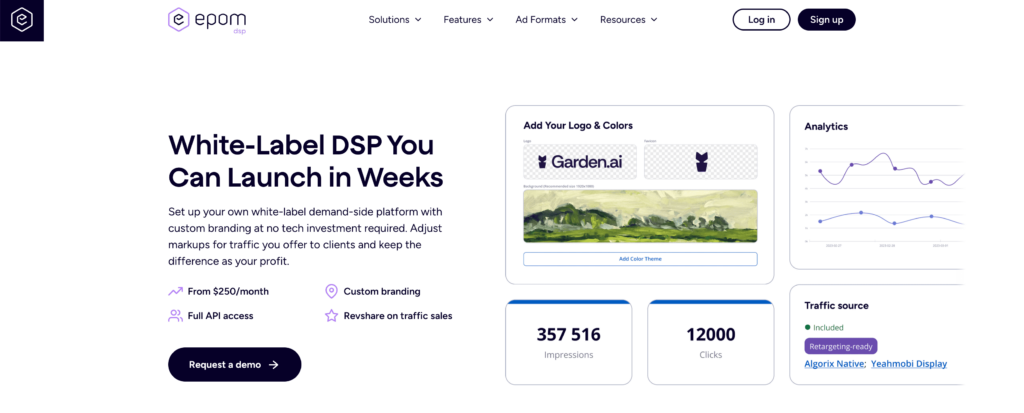
A white label DSP is software you run as your own platform: your logo and domain, your SSP connections, your margins. Epom’s Light plan costs $250 per month and Pro costs $2,000 per month, or 5% of ad spend if that is higher. Enterprise is priced on request, and a free trial is available on request.
For affiliates the key points are custom SSP endpoints, CPC bidding and explicit support for niches such as CBD, iGaming and crypto — verticals the enterprise DSPs often restrict. It is also a common building block for teams planning to start their own ad network.
- Access: monthly SaaS subscription
- Channels: desktop, mobile, in-app, CTV
- Best for: affiliates, media buying teams, small ad networks and agencies
- Watch out for: supply quality depends on the SSPs you connect; you own the fraud filtering
Also on the Shortlist
These popular DSPs and performance platforms didn’t make the main list, but they regularly come up in media buyers’ comparisons:
- AppLovin Ads — not an open-web DSP, but its self-serve platform (briefly branded Axon) opened to all advertisers in June 2026 and is pushing into e-commerce with in-app inventory and AI-generated creatives.
- Criteo — commerce media and retargeting, strong for retailers and D2C.
- Adform — independent European platform, common for EU buyers with strict GDPR requirements.
- Nexxen, Basis, Simpli.fi — video and CTV, agency workflow automation, and local geo targeting respectively.
- Removed from 2026 lists: Microsoft Invest (closed February 28, 2026).
Finding and Shortlisting the Right Demand Side Platform
Search online and every list of the best options looks similar, because most are drawn from the same handful of leading DSP vendors. Not every name on a list of demand side platforms deserves a spot on your shortlist. The harder, more useful question is not which demand-side platform ranks highest on someone else’s list, but which one fits your channel, budget and in-house skills — the same filters used to build the comparison table earlier in this guide.
Selecting a DSP Among the Best DSP Platforms on the Market
Start from the channel you actually need — CTV, native, mobile or shopper data — rather than from a generic ranking of demand-side platform companies. Pull three or four candidates whose case studies match that channel, request a trial or a managed pilot from each, and run them against the same budget and the same creative for at least one full learning phase before choosing the right DSP. Selecting a DSP on brand reputation alone, without a side-by-side test, is one of the most common reasons teams end up switching platforms within a year — the eight covered here are the top demand-side platforms and the top demand side platform options most performance teams actually shortlist today.
When “Best DSPs” Means Something Different for You
There is no single best DSP, and even among the top DSPs none is universally best — explore the top of any list of ad platforms and you’ll find the same names reordered, which is exactly why this remains a starting point, not a verdict. A performance affiliate optimizing cost per install wants something different from a brand advertiser running CTV reach campaigns, and both want something different from a publisher-side team comparing supply-side platforms rather than demand-side ones. Treat “best dsp” as shorthand for “best DSP for this specific campaign,” and the shortlisting process above will get you there faster than any single ranking can.
How Much Does It Cost to Run Campaigns Through a DSP?
The total cost is always the sum of several layers:
Total cost = media (CPM) + DSP platform fee + data fees + verification fees + management fee (if managed)
- Media. You pay for impressions on a CPM basis. Open-exchange display is the cheapest; video costs more, and CTV clears at a multiple of display prices.
- Platform fee. Usually a percentage of media spend. Epom puts the market average at 10–15%; enterprise platforms with bundled data and services can land higher.
- Data and verification. Third-party audiences, contextual segments and brand safety tools are typically charged as a CPM add-on.
- Management. Managed service or an agency adds its own fee on top.
| Platform | Official entry | Realistic working budget |
|---|---|---|
| Amazon DSP (self-serve) | No Amazon-imposed minimum | $5,000–$15,000/month |
| Amazon DSP (managed) | ~$50,000/month | Same |
| StackAdapt | No stated minimum | Enough to exit learning; test-friendly |
| Epom WL DSP | $250 or $2,000/month (or 5% of spend) | Depends on your SSP mix |
| The Trade Desk, DV360, Yahoo, MediaMath | Contract | Five figures per month and up |
Quick example. With a $10,000 monthly budget and a 15% platform fee, $8,500 goes to media. At a $3 display CPM that buys about 2.8 million impressions. At an assumed $25 CTV CPM, the same money buys about 340,000. Always model the budget in impressions and expected conversions before you sign.
How to Choose the Best Demand-Side Platform: 7 Checks
- Match the budget to the learning phase. A DSP needs conversion signal to optimize. If your budget can’t produce dozens of conversions per week, start with an ad network or a self-serve DSP with no minimum.
- Pick by channel, not by brand. CTV points to Viant, The Trade Desk or Amazon. Native and contextual point to StackAdapt. YouTube points to DV360. In-app performance points to AppLovin or a mobile DSP.
- Know what data you bring. Strong first-party data makes any DSP better. Without it, platforms with proprietary data (Amazon shopper data, Viant household data) have an advantage.
- Check vertical policies first. Gambling, crypto, nutra and dating are restricted or require certification on most enterprise DSPs. For those offers, white label DSPs and specialized gambling ad networks are usually the realistic route.
- Demand transparency. Ask for the exact fee structure, log-level data availability, supply path optimization options, and whether AI-driven bid adjustments can be switched off.
- Treat brand safety and fraud as non-negotiable. Require pre-bid filtering, ads.txt and sellers.json checks, and integration with third-party verification. Invalid traffic costs more than any platform fee.
- Align attribution with your analytics. Mismatched attribution windows between a DSP’s dashboard and your own reporting are a common source of budget disputes between marketing and finance, and they’re far easier to fix before launch than after.
Self-Serve, Managed or White Label?
The same DSP can often be used in different ways, and the access model affects cost as much as the platform itself.
| Model | You get | You give up | Fits |
|---|---|---|---|
| Self-serve | Full control, lower cost | Time and expertise | Teams with an in-house trader |
| Managed | Platform team runs campaigns | Higher minimums and fees | Brands without programmatic staff |
| White label | Your own branded platform and margins | Supply sourcing and fraud control are on you | Affiliates, ad networks, agencies reselling media |
When an Ad Network Beats a DSP for Affiliates
A DSP is not automatically the better tool. For push, popunder, in-page and native affiliate campaigns, ad networks with built-in RTB are faster to launch, accept smaller budgets and allow more verticals. A DSP pays off when you need premium inventory, CTV, first-party audiences or scale beyond what one network can supply.
A practical path for most media buyers: test offers on networks from our list of ad networks with cheap push traffic or the best PPC ad networks, find the angles that convert, then move proven campaigns to a DSP for scale. If you are still choosing a format, compare push vs. native ads, and for the economics of buying traffic, see how traffic arbitrage works.
FAQ
Quick answers to the questions advertisers and affiliates ask most often before choosing a demand side platform.
What is a demand-side platform?
A demand side platform is software that lets advertisers buy ad impressions automatically across many ad exchanges and SSPs from one interface. It evaluates each impression in real time against your targeting, budget and bid rules, places a bid, and reports on the results.
What is the difference between a DSP and an SSP?
A DSP works for the advertiser and buys inventory; an SSP works for the publisher and sells it. The SSP offers each impression to many buyers and sets price floors, while the DSP decides which impressions to bid on and how much to pay. Both connect through ad exchanges.
What is the difference between a DSP and an ad network?
An ad network aggregates inventory and resells it at its own price, with its margin included, usually on CPM, CPC or CPA terms. A DSP doesn’t own inventory: it gives you access to many supply sources through RTB and charges a platform fee, while you control bidding and supply selection.
Which DSP is best for advertisers in 2026?
It depends on budget and channel. The Trade Desk remains the leading independent option for large open-web and CTV budgets. DV360 is best for YouTube and Google-centric advertisers. Amazon DSP leads for retail and shopper data, now with no self-serve minimum. StackAdapt is the strongest self-serve pick for mid-market buyers, Viant for CTV, and Epom’s white label DSP for affiliates who need niche verticals and their own SSP connections.
How much does it cost to run campaigns through a DSP?
You pay for media on a CPM basis plus a platform fee, usually a percentage of spend, and often extra for data and verification. Entry points range from $250 per month for a white label DSP to around $50,000 per month for Amazon’s managed service. Most self-serve DSPs need at least a few thousand dollars a month to optimize properly.
Can a small advertiser use a DSP?
Yes. StackAdapt states no minimum spend, Amazon DSP removed its self-serve minimum in November 2025, and white label platforms such as Epom start at $250 per month. The real limit is data: with a very small budget, the algorithm can’t learn, so small advertisers often start on ad networks and move to a DSP once campaigns are proven.
How do I choose the right DSP platform?
Match the platform to your channel first — CTV, native, mobile or shopper data — then test two or three candidates against the same budget before committing. Choosing the right DSP is a shortlisting process, not a single decision based on a ranking list.
What’s the difference between a leading DSP and a supply-side platform?
A DSP represents advertisers buying ad inventory; supply-side platforms represent the publishers selling it. A leading DSP typically also plugs into multiple supply-side platforms and ad exchanges to reach as much inventory as possible.
Is there a single best DSP for every advertiser?
No. The best DSP for a CTV-heavy brand campaign is rarely the best DSP for a performance affiliate optimizing cost per install. Use the seven checks above to find the best fit for your own budget and channel mix rather than chasing a generic top-10 list.
How is a demand-side platform different from a data management platform?
A demand-side platform buys media and runs the auction-time bidding; a data management platform stores and organizes audience data that a DSP can then use for targeting. Some vendors bundle both into one platform, but the two jobs remain distinct even when the interface is unified.
Conclusion
The DSP market in 2026 is smaller at the top and more open at the bottom. Microsoft is gone from the buy side, Google keeps its stack under new rules, and The Trade Desk is fighting to restart growth. At the same time, Amazon, StackAdapt and white label platforms have made programmatic buying accessible to much smaller budgets.
Choose by channel, data and budget, not by brand name. Test on a self-serve platform or an ad network, confirm fees and supply transparency in writing, and scale only what already converts.
For more traffic sources, browse the AffRoom ad networks directory, compare options in our advertising platforms comparison, and find offers to run in the CPA networks directory.