CPA Networks
 Ad Networks
 Affiliate Programs
 Offer base



In February 2026 Ezoic raised the entry bar for new sites to 250,000 monthly active users. Publishers below that line, and growing publishers who are tired of layout tests, script weight and unclear plans, now need a new home for their ad inventory. This guide ranks the best ad networks for publishers in 2026 by what you actually have: traffic, geo and niche, and shows which alternative ad network fits smaller publishers and long-running sites.
The data is current as of October 2026. If you are just starting out, read how to monetize a website first. Picking a partner starts with the traffic requirements you can actually meet, because your ad network depends on your traffic, geo and niche. Then return here to compare ad monetization options for your traffic level.
This guide was prepared by the AffRoom team. AffRoom is a catalogue of ad networks, CPA networks and affiliate programs with honest reviews, and you can compare every ad network in our catalog and see how different advertising networks treat small and growing sites.

What Changed at Ezoic and Why Publishers Seek Alternatives
Ezoic is an ad management platform with site speed tools and access to many demand partners. Ezoic uses AI to optimize ad placements and test thousands of ad layouts automatically. Several things push publishers looking for Ezoic alternatives to review other options:
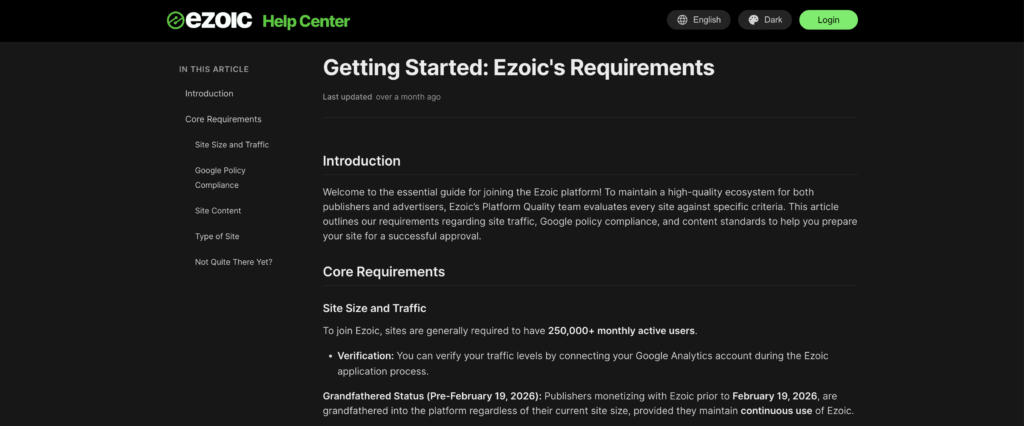
- The 250,000 threshold. According to its own requirements page, sites need 250,000+ monthly active users. Publishers already monetizing before February 19, 2026 are grandfathered, but a small site that removes the integration for more than 7 days loses that status. New sites added to an account after that date must meet the threshold.
- Layout tests. Automated testing changes layouts and ad density, and earnings can fluctuate during the learning period. Publishers with a strict brand or UX often want manual control.
- Speed. Extra scripts can affect Core Web Vitals. Test this on your own pages instead of trusting any vendor claim, including ours.
- Plans and fees. Third-party comparisons describe an ad-funded default, a 10% revenue share option and paid premium plans. Some competitors also report a one-year lock-in on premium. Check the current terms in your account before you decide.
- Content rules. It follows Google policies, so gambling, auto-generated content and some adult, alcohol and healthcare content are excluded. That is a common reason for gambling and adult publishers to move to push, pop and native networks.
It is not a bad ad platform: it reports about 15% higher EPMV for customers who add first-party data (a company-reported figure). The point is that it no longer fits every site, which is why many publishers are moving to a different ad network or combining several partners.

Top 10 Ad Networks for Publishers: Ezoic Alternatives at a Glance in 2026
Looking for sites like Ezoic? The table sorts the best ad networks for publishers by traffic requirement, types of ad formats and payout terms. Use it to compare ad network options at your traffic level, then read the detailed reviews below.
| # | Network | Type | Entry requirement | Payouts | Best for |
|---|---|---|---|---|---|
| 1 | Mediavine | Managed display | $5,000 annual ad revenue | Net 65 | Content sites with brand-safe traffic |
| 2 | Journey by Mediavine | Self-supported | 1,000 Tier-1 sessions in 30 days | Net 65 | Small and growing blogs |
| 3 | Raptive | Managed display | 25,000 pageviews a month | Net 45 | Tier-1 traffic, long-form content |
| 4 | Setupad | Header bidding | 100,000+ monthly visitors | Monthly, €100 minimum | Mid-size sites with US/EU traffic |
| 5 | Newor Media | Managed display | About 5,000 users (vendor claim) | Net 30 | Smaller sites that missed Ezoic’s cut-off |
| 6 | Google AdSense | Self-serve | No traffic minimum | Monthly, $100 minimum | Quick start and a fallback |
| 7 | Media.net | Contextual | No hard minimum | Net 30, $100 minimum | US and UK traffic |
| 8 | Adsterra | Push, pop, native | No minimum | $5 minimum, every 2 weeks | Small and non-premium sites |
| 9 | Monetag | Push, pop, vignette | None stated | $5 minimum | Mobile and Telegram traffic |
| 10 | HilltopAds | Pop, banner, push | New sites welcome | Weekly payments | Entertainment, utilities, niche sites |
Premium Networks Like Mediavine: Best 5 Ezoic Alternative for Publishers With Real Traffic
These networks manage ad operations for you and usually bring higher RPM, but they are selective and often want exclusive display rights. Every publisher needs the exact numbers before applying, and these premium ad networks like Mediavine are built to deliver higher earnings for publishers with clean Tier-1 traffic.
1. Mediavine: Best Ad Network for Content Publishers
Mediavine is the main rival for content sites. Full service now asks for a minimum of $5,000 in annual ad revenue instead of the old 50,000-session rule, plus original content and clean, brand-safe traffic, per its requirements page. Sites must also be in good standing with Google AdSense and AdExchange. Once you qualify, it usually offers high-quality ad inventory and strong ad optimization for lifestyle, food and parenting content. Publishers with strong original content and brand-safe traffic have the best chances.
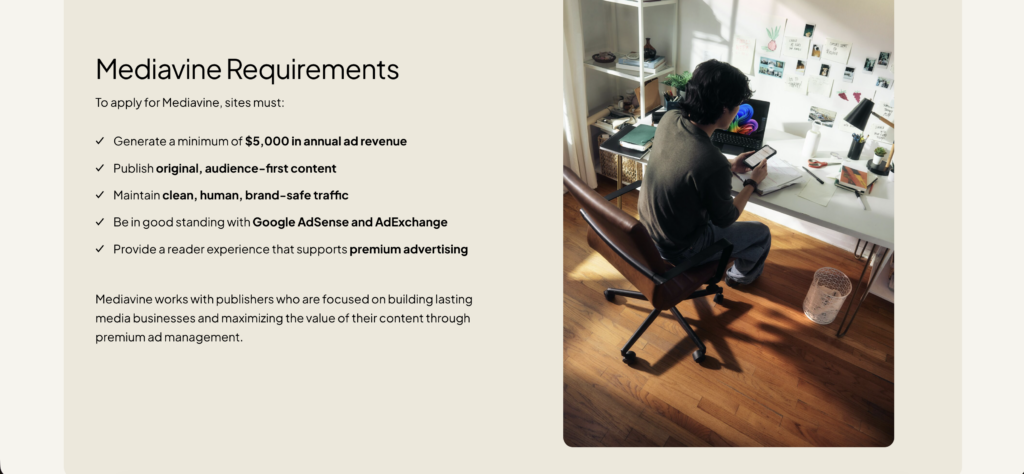
- Entry requirement: $5,000 annual earnings
- Payouts: Net 65 (third-party comparisons)
- Good for: lifestyle, food, home and parenting content
- Skip if: you rely on mixed-quality or non-Tier-1 traffic
2. Journey by Mediavine: One of the Best Alternatives for Smaller Sites
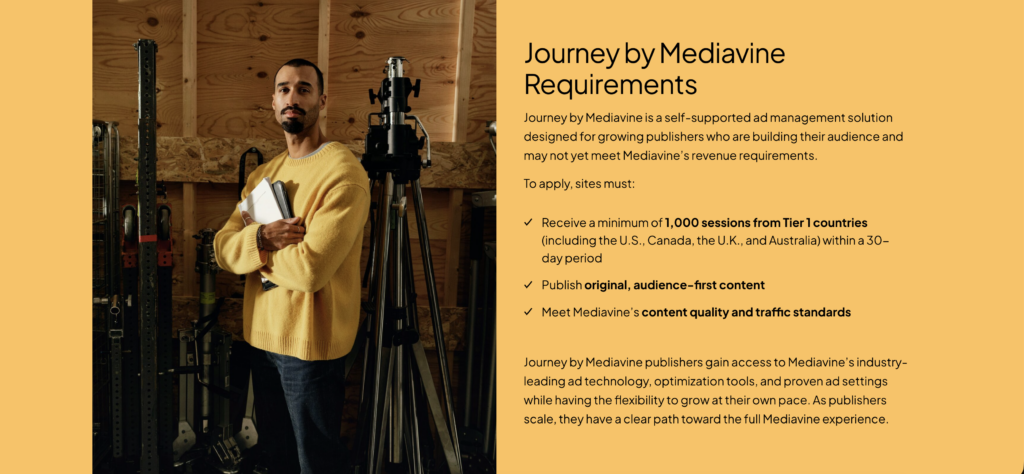
The self-supported tier for smaller sites. It needs at least 1,000 sessions from Tier-1 countries within a 30-day period and original, audience-first content. It is one of the few real alternatives for small websites, because the growth path to full Mediavine is built in. It is a rare option for publishers who are too small for the premium tier, and a good starting point for new publishers.
- Entry requirement: 1,000 Tier-1 sessions in 30 days
- Payouts: Net 65 (third-party comparisons)
- Good for: new blogs with US, UK, Canada or Australia traffic
- Skip if: most of your traffic is from Tier 2 and Tier 3 GEOs
3. Raptive: Display Ad Management for Long-Form Sites
Raptive (formerly AdThrive) cut its minimum from 100,000 to 25,000 monthly pageviews in October 2025. According to its eligibility article, sites with 25,000–99,999 pageviews need 50% of traffic from the US, UK, Canada, New Zealand or Australia, and sites above 100,000 need 40%. It also asks for a domain at least 6 months old, Google Analytics set up correctly and original content with meaningful human involvement. Raptive handles display ad management for established publishers, so it suits long-form content sites. Publishers with high US and UK traffic share fit best, and publishers who want hands-off monetization should check it first.
- Entry requirement: 25,000 pageviews a month with the geo split above
- Payouts: Net 45 (third-party comparisons)
- Good for: long-form content sites with English-speaking traffic
- Skip if: your content is thin or heavily auto-generated
4. Setupad: Header Bidding for Mid-Size Publishers
A header bidding specialist. Its Prebid-based wrapper connects a site to 28+ SSPs, which creates competitive bidding for every impression. Per an independent review, the wrapper runs on an 80:20 split, applications start at 100,000+ monthly visitors, the first payout comes after about 60 days and later payouts are monthly from €100, in euros only. Setupad also offers video ads and native ads units, which helps mid-size sites diversify across various ad formats.
- Entry requirement: 100,000+ monthly visitors, preferably Tier 1
- Payouts: monthly, €100 minimum
- Good for: mid-size sites that want header bidding without building it in-house
- Skip if: you need fast first payouts or payments in dollars
5. Newor Media: One of the Ad Networks for Small Publishers
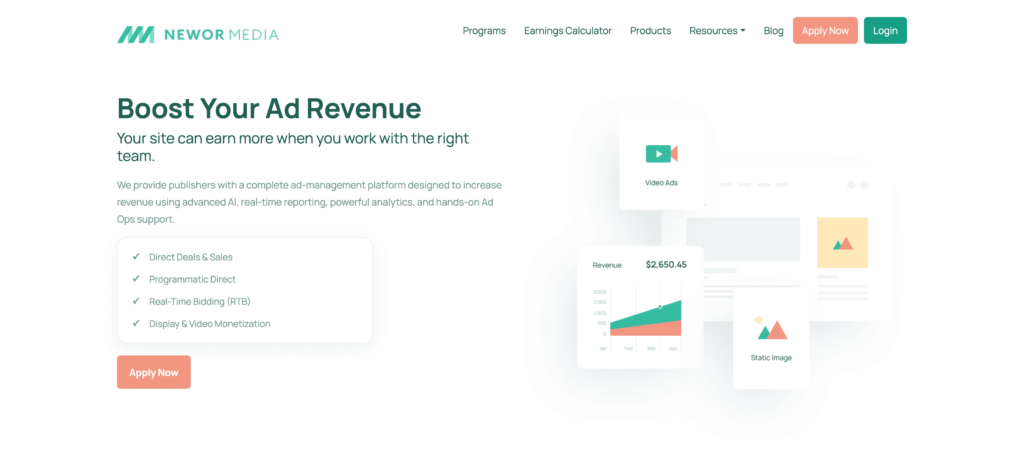
A managed network that targets sites too small for the largest managed brands. By its own blog, it takes sites from about 5,000 monthly users, shares roughly 70–75% of revenue and pays Net 30. Treat those numbers as vendor claims and ask for written terms. Among managed options, it has one of the lowest traffic thresholds.
- Entry requirement: about 5,000 monthly users (vendor claim)
- Payouts: Net 30 (vendor claim)
- Good for: small and mid-size sites with general, finance, tech or health content
- Skip if: you want published, independently verified terms
2 Self-Serve Alternatives to Ezoic
Self-serve networks let you sign up and place ad code yourself, with no traffic minimum or account manager, so they suit new and small sites.
6. Google AdSense: Easiest Start Without Traffic Minimums
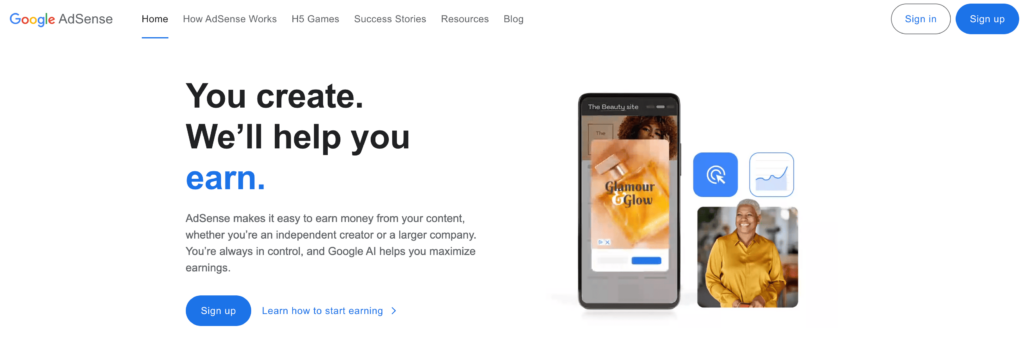
The default fallback. There is no traffic minimum, setup is simple and the control is yours. Per Google’s support page, publishers receive 80% of revenue after the advertiser platform takes its fee, and about 68% when advertisers buy through Google Ads. The payment threshold is $100. Third-party sources note that approval got stricter in 2026, especially for AI-generated or recycled content. For many beginners it is the safest first network, and later you can add relevant ads from other partners or test other ad formats. If AdSense rejects your site, the best AdSense alternative is usually a push or native network, and these Google AdSense alternatives start with lower minimums.
- Entry requirement: none for traffic, content and policy review
- Payouts: monthly, $100 minimum
- Good for: a quick start, a base layer or a test
- Skip if: you want maximum CPM: managed header bidding stacks usually beat it, according to vendor comparisons
7. Media.net: Contextual Network for US and UK Traffic
Contextual ads powered by Yahoo and Bing. Competitor comparisons describe it as best for US and UK traffic, with Tier 2 and Tier 3 traffic discouraged, a $100 minimum and Net 30 payouts.
- Entry requirement: no hard minimum, works better above roughly 10,000 monthly visits
- Payouts: Net 30, $100 minimum
- Good for: sites with US and UK search-driven traffic
- Skip if: your audience is mostly outside Tier 1
3 Push, Pop and Native Ad Networks for Non-Premium Traffic
If your site does not qualify for managed display networks, or sits in a niche that Google-based platforms avoid, push, popunder and native networks are the practical choice. They pay by CPM or CPC and often start from the first visitor. Compare the formats in our push ads vs. native ads guide, and check CPC and CPM cost models if the pricing terms are new to you. Native and push networks suit new sites, and many publishers start with just one ad network before adding more. Leading ad networks in this group publish low minimums, so you can test them quickly.
8. Adsterra: Fast Payouts With No Traffic Requirement
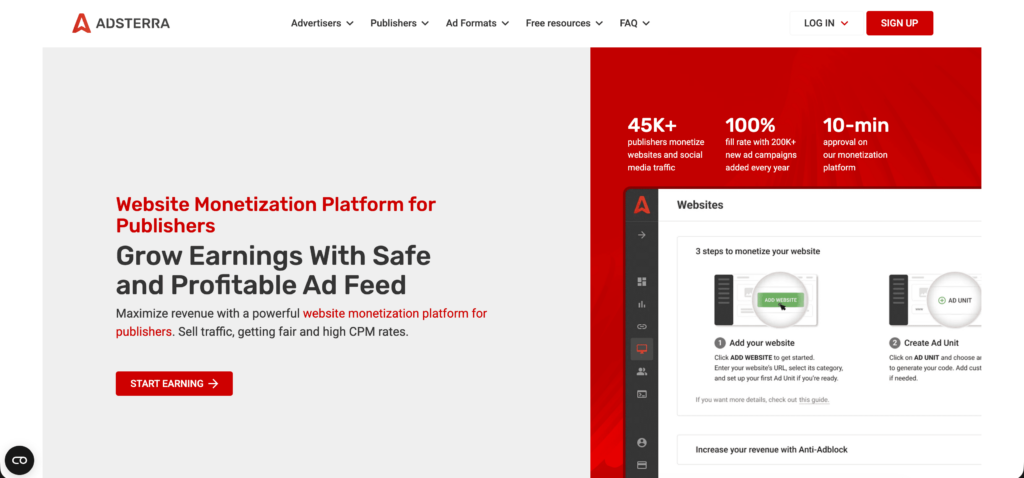
Per AffRoom’s review, Adsterra works with publishers with no minimum traffic and no fees. The minimum payout is $5, with automatic payouts every two weeks via PayPal, WebMoney, Paxum, bank transfer and crypto. Formats include Social Bar (in-page push and interstitials), banners, popunders and native, and Smartlink can monetize social traffic without a site. AffRoom rating: 4/5. The network also allows publishers to start on day one.
- Entry requirement: none, traffic must be genuine
- Payouts: $5 minimum, every 2 weeks
- Good for: small sites, adult and entertainment, mobile traffic
- Skip if: you need premium display brands
9. Monetag: Push and Native Ads for Mobile Traffic
Per its own Ezoic alternatives article, Monetag has no stated traffic minimum, a $5 payout minimum with weekly or custom payments, and formats that include push, in-page push, popunders, vignette banners, smartlinks and Telegram Mini App ads. It is a strong fit for publishers with mobile or messenger traffic. For Telegram specifically, see Telegram monetization. Monetag also supports video ads and native ads, plus ad formats built for Telegram.
- Entry requirement: none stated
- Payouts: $5 minimum, weekly or custom
- Good for: mobile, social and Telegram traffic
- Skip if: you cannot accept intrusive formats on your pages
10. HilltopAds
Per the AffRoom review, HilltopAds has worked since 2013, welcomes traffic from new sites and offers popunders, banners, in-page push, direct links and pre-roll video. Publishers get anti-ad-block technology, 24/7 support and no transaction fees. AffRoom rating: 4.6/5. The review does not state a publisher payout minimum, so confirm it in your account.
- Entry requirement: new and niche sites welcome
- Payouts: weekly payments (confirm publisher terms)
- Good for: entertainment, file-sharing and utility sites
- Skip if: you want hands-off optimization
Also worth a look: RollerAds (website and domain monetization in one account, AffRoom rating 4.8/5, see the RollerAds case study), Monumetric (about 10,000 pageviews to start, per third-party lists) and Publift (aimed at large publishers: its own comparison page cites 500,000 monthly pageviews and/or $2,000 monthly revenue).
Choosing the Right Ad Network: How to Switch Without Losing Revenue
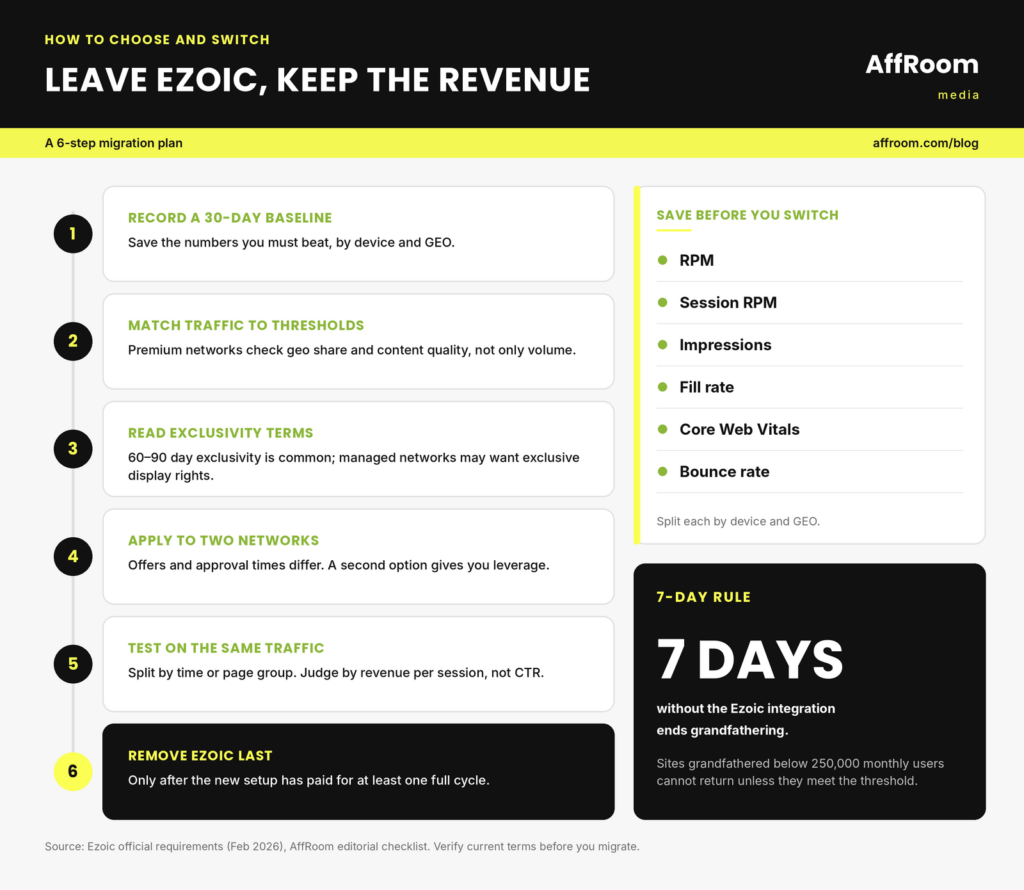
- Record a 30-day baseline. Save ad performance data such as RPM and session RPM, impressions, fill rate, Core Web Vitals and bounce rate by device and GEO.
- Match your traffic to the thresholds. Premium networks care about geo share and content quality, not just volume.
- Read exclusivity and lock-in terms. A 60–90 day exclusivity clause is common, and managed display networks often want exclusive display rights.
- Apply to two networks. Approval times and offers differ, and a second option gives you leverage.
- Test on the same traffic. Split by time or by page group, keep layouts comparable and judge by revenue per session, not CTR.
- Remove Ezoic last. If your site is grandfathered below 250,000 users, removing the integration for more than 7 days means you cannot come back unless you meet the threshold. Take the decision only after the new setup has paid for at least one full cycle.
Layouts decide as much as the network does, so use the ad placement guide when you set up the new units. If you later move from selling traffic to buying it, our list of the best DSP platforms is the next step. Ad technology keeps changing, so revisit your setup every quarter, and remember that ad networks act as partners, not owners of your traffic.
FAQ: Ezoic Alternatives for Publishers
What is the best ad network for sites leaving Ezoic?
It depends on traffic. For sites with English-speaking Tier-1 audiences, Raptive (from 25,000 pageviews) and Mediavine (from $5,000 in annual earnings) are the main premium options. Smaller sites can start with Journey or AdSense, and sites with non-premium or mobile traffic can use Adsterra, Monetag or HilltopAds. For publishers with growing traffic, a good move is to start small and add a second partner after the first payout cycle. The best alternatives for each traffic level are listed in the table above.
Why do publishers switch from Ezoic?
The most common reasons are the 250,000 monthly users threshold for new sites, automated layout tests and ad density, extra scripts affecting speed, unclear plan terms and content rules that exclude some niches.
Is Google AdSense a good option to replace Ezoic?
For starting out, yes. There is no traffic minimum and setup is simple, but vendor comparisons say managed header bidding stacks usually earn more once traffic grows. Approval is also stricter in 2026 for low-quality and AI-generated content.
Which alternatives accept small sites?
Journey (1,000 Tier-1 sessions in 30 days), Google AdSense, Adsterra, Monetag and HilltopAds have low or no traffic minimums. Newor Media says it works with sites from about 5,000 users. Ezoic also runs an Incubator program for sites below its threshold.
How much do ad networks pay compared with Ezoic?
Not automatically. Revenue depends on your geo, niche, content quality and layouts. Managed display brands tend to pay higher RPM for US, UK and Canadian traffic, while push and pop networks pay less per impression but accept more traffic. Test on the same pages and compare revenue per session. Payment terms matter as well, so read the minimum payout and schedule.
Can publishers use multiple ad networks on one website?
Yes, with limits. Networks like Mediavine and Raptive usually require exclusive display ad management, but you can often combine them with non-conflicting formats such as push or native. Read each contract’s exclusivity clause before you stack networks. Most ad networks work best when each partner controls clearly separate ad units.
Conclusion: The Best Choice for Publishers Among the Alternatives
The best Ezoic alternative is the one that matches your traffic. Managed display networks pay more for clean Tier-1 audiences, AdSense is the easy baseline, and push, pop and native networks give every other site a way to earn. Compare the thresholds, test on the same traffic and remove Ezoic last. That is the realistic way for publishers to earn more without a risky switch.
Ready to pick a partner? On AffRoom you can compare ad networks by format, GEO and payment terms, read honest reviews from other publishers and grab exclusive promo codes for your first campaigns.